
1. Compulsory Team-Building Exercises

Team-building exercises are meant to strengthen bonds, but many employees secretly hate them. Trust falls and awkward icebreakers rarely translate into better work relationships. They often feel forced and uncomfortable. Yet, organizations insist participation is essential for morale.
Employees comply to avoid seeming uncooperative. Genuine connection is rarely built in an hour-long activity. The time spent could be used for meaningful collaboration. Still, it’s presented as a critical part of office culture.
2. The 9-to-5 Schedule

Why is everyone still obsessed with a strict 9-to-5 schedule? Studies repeatedly show that productivity doesn’t always align with these hours. Yet, offices cling to it like it’s a sacred ritual. People naturally have different energy peaks, but many are forced to be present even when they’re not at their best.
Employees often end up spending more time commuting than actually working efficiently. Flexible schedules could reduce stress and increase output, but it’s rarely adopted. Yet, the cultural expectation persists. Nobody questions it, even when evidence suggests there are better options.
3. Reply-All Email Chains
Reply-all emails somehow survive every workplace, despite everyone knowing they’re annoying. Someone forwards an email, then dozens feel compelled to respond to all. The result? Inbox chaos that wastes precious time. People just shrug and keep doing it.
Why not just reply to the sender if it’s relevant? It’s simple logic, but social dynamics in offices make it hard to break. Fear of being rude often trumps common sense. Consequently, the unnecessary flood of emails keeps rolling.
4. Unwritten Dress Codes

Most offices no longer require suits, but subtle dress codes still dictate what’s acceptable. People guess what counts as “professional” and play it safe. Complaints are rare because nobody wants to be seen as difficult. This creates a vague, unspoken pressure that doesn’t improve performance.
Employees spend mental energy worrying about appearances instead of work. Yet, leadership rarely clarifies the rules. It’s like walking on a tightrope daily. Still, everyone silently enforces this invisible dress code.
5. Open Office Plans

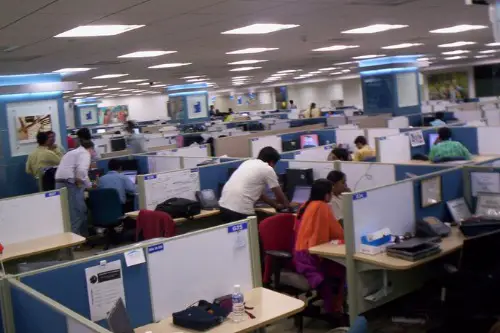
Open offices were supposed to boost collaboration and communication. In reality, they often amplify distractions and stress. People struggle to focus amid constant noise, but managers praise the “team vibe.” Despite ample evidence that closed spaces can improve productivity, open layouts remain common.
Workers compensate by using headphones or retreating to quiet corners. Social expectations make it awkward to complain. Productivity dips, yet the layout is defended as innovative. Nobody seems to question whether it’s actually helping the team.
6. Unlimited PTO That’s Practically Useless

Unlimited paid time off sounds amazing in theory. But in practice, many employees take less leave than they would under traditional policies. Fear of judgment or career repercussions keeps people from fully using it. It’s a benefit in name only for some companies.
Managers often subtly pressure employees to appear “dedicated.” The policy becomes performative rather than practical. People feel guilty even when they do take time off. Yet, the policy remains unchallenged because it looks progressive on paper.
7. Birthday Celebrations Everyone Pretends to Enjoy

Most workplaces have birthday celebrations, complete with cake and awkward singing. While meant to boost morale, many employees secretly dread it. For introverts or those who dislike attention, it’s stressful. Yet, nobody ever stops the tradition.
Companies insist participation is mandatory to maintain “culture.” People fake enthusiasm, which creates a cycle of forced positivity. This tradition continues year after year without questioning its actual value. Still, we all play along to avoid awkwardness.
8. Micromanagement Masquerading as Leadership

Micromanagement is everywhere, yet people pretend it’s just “good guidance.” Employees often have to report back on every small task. This kills autonomy and morale, but managers see it as being thorough. The irony? Productivity often drops, but no one stops it.
Teams adapt by hiding mistakes or over-communicating. Creativity suffers because people fear doing anything outside strict boundaries. Yet, the behavior is justified under the guise of accountability. Everyone nods along instead of challenging it.
9. The “Weekend Work” Expectation

Even when offices claim to respect work-life balance, weekend emails abound. Employees feel pressured to reply immediately, just in case. Ignoring these messages can sometimes be interpreted as unprofessional. This culture makes “off days” almost meaningless.
People become anxious about missing opportunities or deadlines. Productivity paradoxically declines because burnout sets in. Yet, managers continue to send emails on Saturdays and Sundays. The expectation is accepted without question.
10. Endless Meetings That Could Be Emails
We all know them: meetings where nothing new gets accomplished. Yet, offices treat them as indispensable. Some managers schedule multiple meetings daily, assuming presence equals productivity. The irony is that the same content could often be shared in a concise email.
People feel obligated to attend, fearing they’ll miss something critical. This creates wasted hours and unnecessary stress. Meanwhile, work piles up, leaving employees exhausted. Still, the practice continues unquestioned.
11. The Unspoken Praise Hierarchy

Some employees get public recognition more often than others for reasons that seem arbitrary. It’s often based on who’s visible to leadership rather than actual contribution. Meanwhile, equally deserving workers stay unnoticed. Everyone observes this silently but rarely addresses it.
This hierarchy can breed resentment and disengagement. Yet, the system persists because it’s “how things are done.” Meritocracy becomes more perception than reality. Still, everyone behaves as though it’s completely fair.
12. The Coffee Requirement

Many offices act as if productivity depends on how much coffee you consume. It’s a ritual: grab a cup, chat by the machine, and power through the morning. Decaf or non-coffee drinkers can feel excluded. Yet, nobody questions why caffeine has become a cultural expectation.
The dependence is subtle but real. People schedule their mornings around coffee breaks. Offices even spend money on fancy machines to encourage it. It’s treated as essential, despite no evidence that it actually improves overall work performance.
13. The Myth of Multitasking

Offices celebrate multitasking as a valuable skill. Managers praise those who juggle five tasks at once. Yet research consistently shows multitasking reduces efficiency and increases errors. Still, workers are expected to switch constantly between projects without pause.
This creates stress and lowers the quality of work. Deep, focused effort often gets interrupted by calls, emails, or meetings. Despite knowing better, offices continue to glorify doing everything at once. Nobody openly challenges this ingrained habit.
This post 13 American Office Rules That Make Zero Sense but No One Questions was first published on American Charm.

