
1. Yellowstone National Park
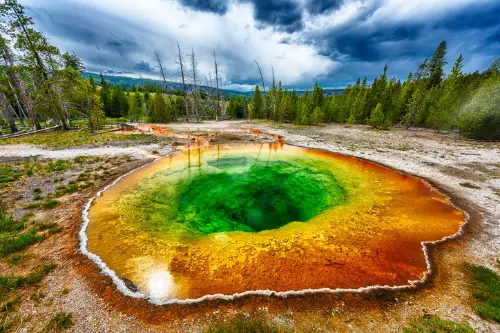
Yellowstone is often celebrated as America’s first national park, established in 1872. Visitors come for geysers, wildlife, and dramatic landscapes. What’s less discussed is the human history tied to the land. Indigenous peoples lived in and used the area long before it became a park.
When Yellowstone was created, those communities were gradually displaced. The park’s early management policies did not account for their presence. That history is now being more widely acknowledged. It adds an important layer to how the park is understood today.
2. Statue of Liberty
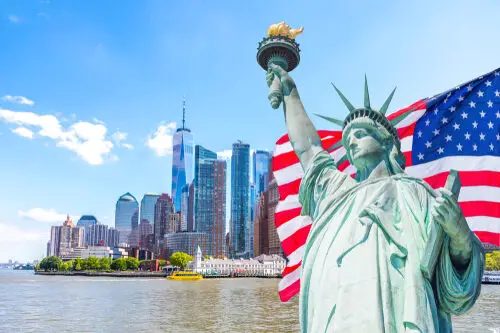
Most visitors see the Statue of Liberty as a straightforward symbol of freedom and immigration. But fewer realize it was originally intended to celebrate the end of slavery in the United States. Early designs even included broken chains prominently in Lady Liberty’s hand. Today, those chains are still there, but they’re at her feet and easy to miss from most angles.
The statue also spent years as a working lighthouse after its dedication in 1886. Its torch was meant to guide ships into New York Harbor, though it never functioned especially well in that role. Funding for the pedestal famously struggled, requiring a public campaign led by publisher Joseph Pulitzer. Even something this iconic had a surprisingly uncertain start.
3. Golden Gate Bridge
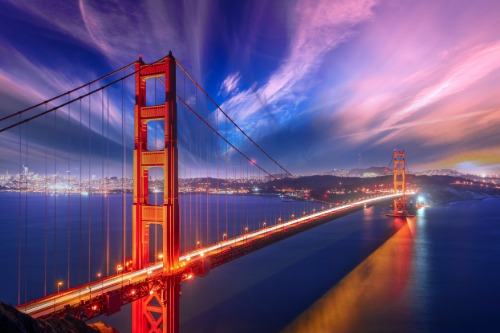
The Golden Gate Bridge is known for its color, but that famous “International Orange” was almost never chosen. The U.S. Navy had pushed for bold stripes to improve visibility in fog. Engineers ultimately argued for a single color that blended safety and aesthetics. That decision became one of the bridge’s defining features.
Construction in the 1930s was also notable for its safety innovations. A large net was installed beneath the bridge to catch falling workers. It saved the lives of 19 men, who later formed a group called the “Halfway to Hell Club.” Even so, 11 workers died during the project, a lower number than expected at the time.
4. Alcatraz Island
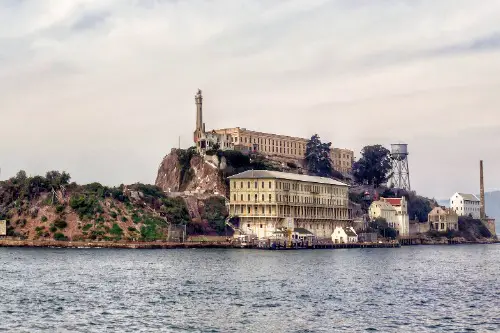
Alcatraz is famous for its role as a federal prison, but that chapter was relatively short. It operated as a high-security penitentiary from 1934 to 1963. Before that, it served as a military fort and prison. Its strategic location made it valuable long before it housed infamous inmates.
After the prison closed, a group of Native American activists occupied the island from 1969 to 1971. They claimed it under a treaty allowing the use of surplus federal land. The occupation brought national attention to Indigenous rights issues. Many visitors today don’t realize this protest is a key part of its history.
5. Ellis Island
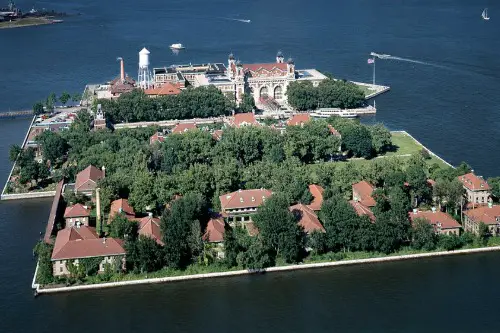
Ellis Island is often remembered as a welcoming gateway for millions of immigrants. While that’s true, the experience wasn’t always smooth or certain. Medical inspections could be brief, but even small concerns might lead to further evaluation. Some families were separated temporarily during the process.
About 2 percent of arrivals were ultimately denied entry. Reasons ranged from illness to legal or financial concerns. For those individuals, the island represented disappointment rather than opportunity. It’s a quieter part of the story that’s easy to overlook.
6. Hoover Dam
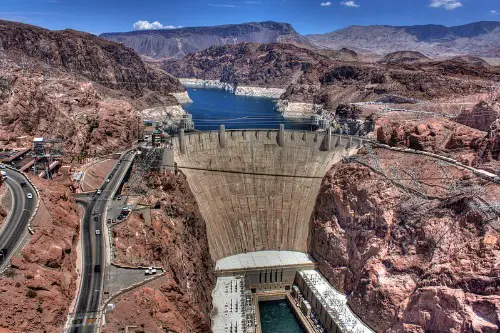
Hoover Dam is often admired for its scale and engineering, but its construction came at a human cost. Thousands of workers endured extreme heat in Black Canyon during the 1930s. Early working conditions were dangerous and sparked labor protests. Improvements came only after workers pushed back.
The dam was originally called Boulder Dam during construction. It was later renamed for President Herbert Hoover, then briefly reverted before the name was restored. That naming debate reflected political tensions of the era. Even the name carries a story many visitors don’t hear.
7. The White House
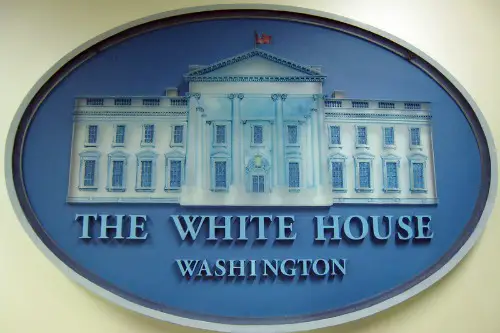
The White House is one of the most recognizable buildings in the country, but it hasn’t always looked the same. British troops burned it during the War of 1812, leaving only the exterior walls. The structure had to be rebuilt and restored afterward. Its current appearance reflects that recovery.
It’s also gone through major interior reconstruction. In the late 1940s, the building was found to be structurally unsound. The interior was essentially gutted and rebuilt while preserving the exterior shell. Visitors walking through today are seeing a carefully reconstructed space.
8. Niagara Falls
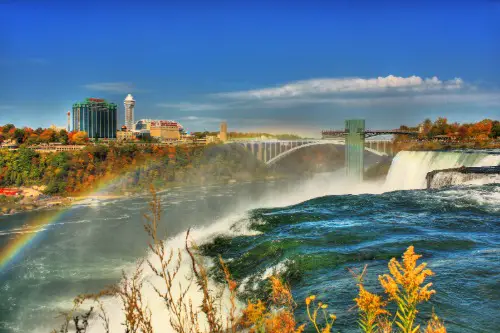
Niagara Falls draws millions for its natural power and beauty. What many people don’t realize is that parts of the falls have been temporarily “turned off.” In 1969, engineers diverted water away from the American Falls. The goal was to study erosion and remove loose rock.
For several months, visitors could see the dry riverbed where water normally rushed. The idea of permanently altering the falls was debated but ultimately rejected. Nature was allowed to take its course again. It’s a rare moment when one of the world’s great natural landmarks paused.
9. The Alamo
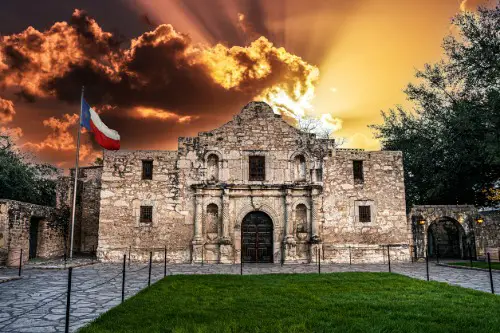
The Alamo is often remembered as a heroic last stand during the Texas Revolution. But the battle in 1836 was part of a larger, more complex conflict. The site itself had previously been a Spanish mission. Its role has shifted significantly over time.
After the battle, the structure fell into disrepair and was nearly lost. Preservation efforts in the late 19th and early 20th centuries saved it. The version visitors see today reflects careful restoration. Its layered history goes far beyond a single moment.
10. Hollywood Sign
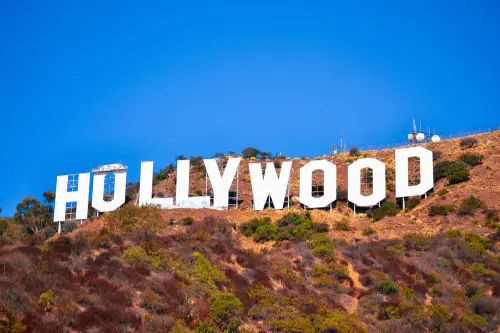
The Hollywood Sign wasn’t originally meant to represent the film industry. It began as a real estate advertisement reading “Hollywoodland” in 1923. Developers used it to promote a housing development in the hills. The sign was only intended to be temporary.
Over time, it became an unofficial symbol of the entertainment industry. The “land” portion was removed in 1949 during renovations. The structure has been rebuilt and reinforced multiple times. What started as marketing turned into an enduring cultural icon.
11. Gateway Arch
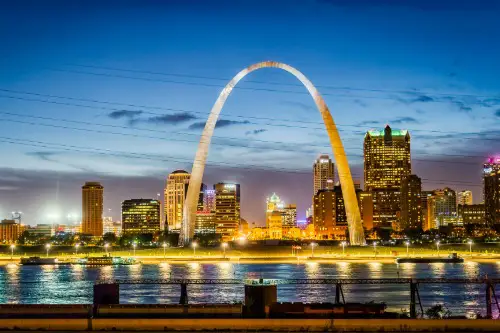
The Gateway Arch is often seen as a symbol of westward expansion. Its sleek design suggests a straightforward tribute to American growth. But the project also required clearing a large section of historic St. Louis. Entire neighborhoods and buildings were demolished to make space.
Construction of the Arch took place between 1963 and 1965. Its stainless steel exterior hides a complex internal structure. Visitors can ride a unique tram system to the top. The monument’s clean look contrasts with the complicated history beneath it.
12. Times Square
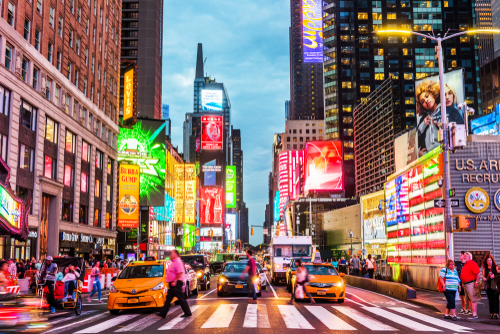
Times Square is known for bright lights and constant activity. In the early 20th century, it became a center for theaters and entertainment. But by the 1970s, it had developed a very different reputation. Crime rates rose and many businesses catered to adult entertainment.
Major redevelopment efforts in the 1990s reshaped the area. Corporate investment and city initiatives transformed its image. Today’s version feels polished and family-friendly. That dramatic shift isn’t always obvious to first-time visitors.
13. Mount Rushmore
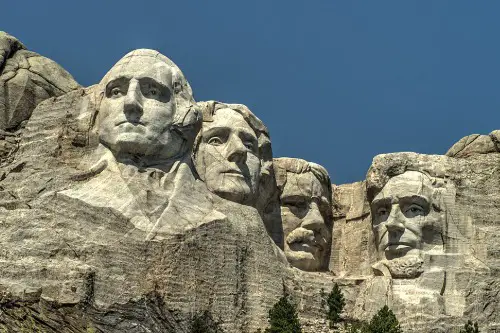
Mount Rushmore looks like a timeless tribute to four presidents, but its story is more complicated. The monument was carved into the Black Hills, land sacred to the Lakota Sioux. The U.S. government had previously recognized the area as Lakota territory in an 1868 treaty. That context often gets left out of casual visits.
There were also plans for much larger sculptures than what you see today. Sculptor Gutzon Borglum intended to carve the figures down to their waists. Funding issues and his death in 1941 halted the project early. What remains is only a portion of the original vision.
This post American Landmarks With Stories Most Visitors Never Hear was first published on American Charm.

